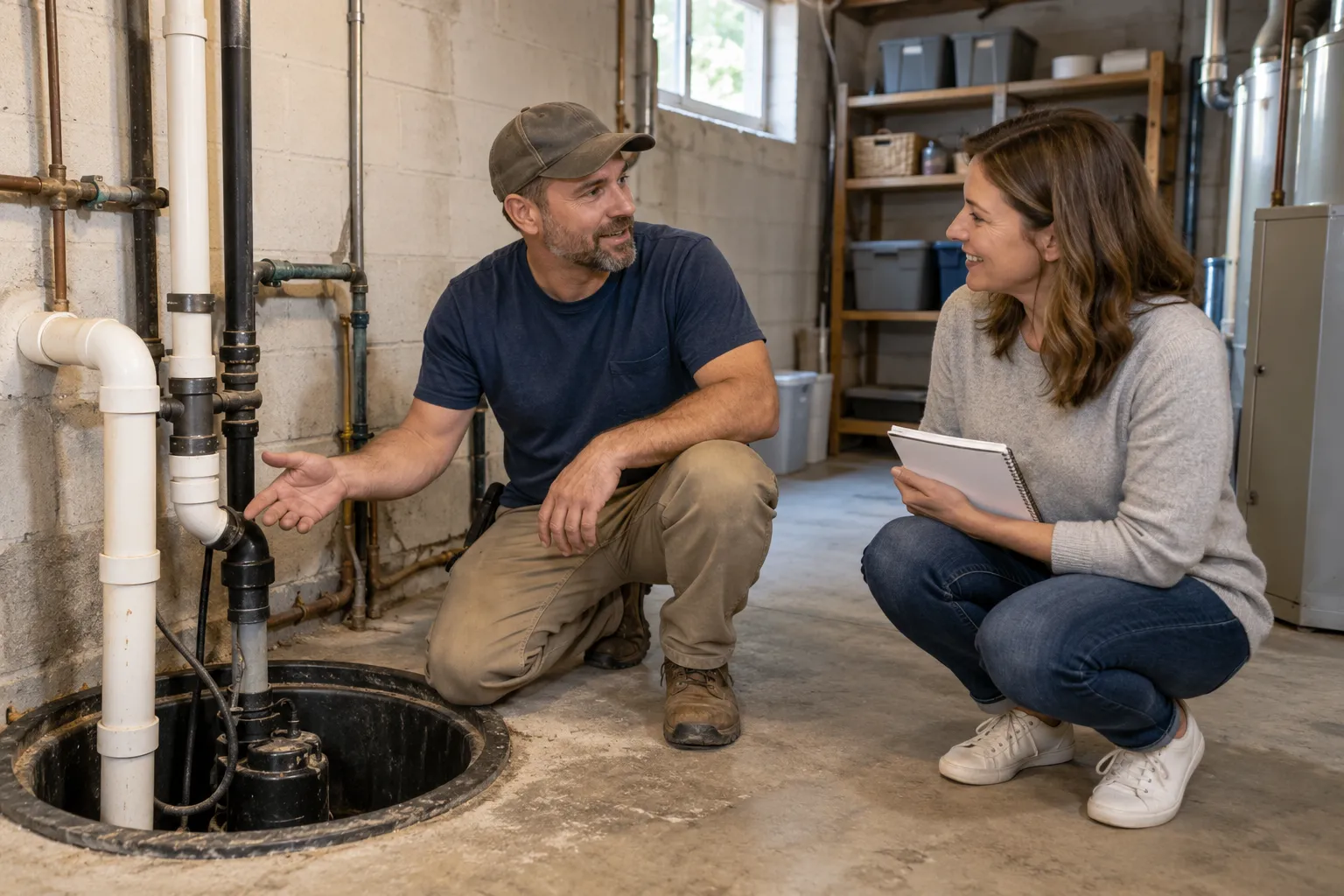
Plumbing Questions Homeowners Ask Most
What people ask us
What can I safely fix myself when a drain backs up?
Say a sink drains slowly. A plunger, a bit of hot water and a hand-cleaned stopper are fair first steps. Stop there if several drains gurgle, water rises in a tub or floor drain, or a smell comes up. Those signs point to a deeper blockage. Ask before you book: can the provider tell you what they found and why?
Are chemical drain cleaners a good idea?
Most plumbers advise caution. Say you pour a harsh cleaner into a stuck drain and it does not clear. Now the pipe holds standing liquid that can burn skin or eyes when a provider opens it. If you used one, tell the provider the product name. Mechanical clearing, like a cable or water jet, is often a safer choice for clogs.
What should I do first when a pipe bursts?
Say you hear water running inside a wall. Find your main shut-off valve and turn it clockwise to close it. Open a faucet to drain what is left in the lines. Switch off power to wet areas only if you can reach the panel safely and dry. Then call a provider. Take photos of the damage as you go.
What happens when a provider arrives for an emergency job?
Expect questions first: where the water is, when it started, what you tried. The provider should look at the problem and explain it in plain words. Then comes a written quote, ideally before work begins. Ask what is included, what could change the price, and how long the repair should take. Be wary of anyone who skips the quote step.
How do I know if my sewer line is the problem?
Picture a basement floor drain bubbling after you run the washer. Or every drain in the house backs up at once. Those are classic signs of a main line issue. Roots, shifted pipe and old clay or cast iron can all be causes. A provider can run a camera through the line to show you the actual pipe.
How can I prevent clogs and frozen pipes?
Keep grease, wipes and food scraps out of drains. Before deep frost arrives, disconnect hoses and insulate pipes in cold spaces like crawlspaces and exterior walls. In spring, test your sump pump before heavy rain. Ask a provider about a camera check if your home is decades old and has had repeat backups.
Will my insurance pay for plumbing damage?
It depends on your policy and the cause. Some policies may cover sudden damage, like a burst pipe, but often exclude slow leaks or wear. Sewer backup coverage is often an add-on. Check your policy or ask your agent. Providers can often help document damage with notes and photos for a claim.
What are the red flags when hiring a plumber?
Know the red flags. Be careful if someone will not give a written quote, asks for full payment up front, pushes you to decide on the spot, or cannot say who will do the work. Good providers explain the problem, offer options, and answer questions calmly. Costs vary by job, so compare a couple of quotes when you can.
Request a callback
Have a plumbing problem or a question about how referrals work? Send a message to contact@peoplespecifically.living or use the request form and we will point you toward a local provider.
No obligation