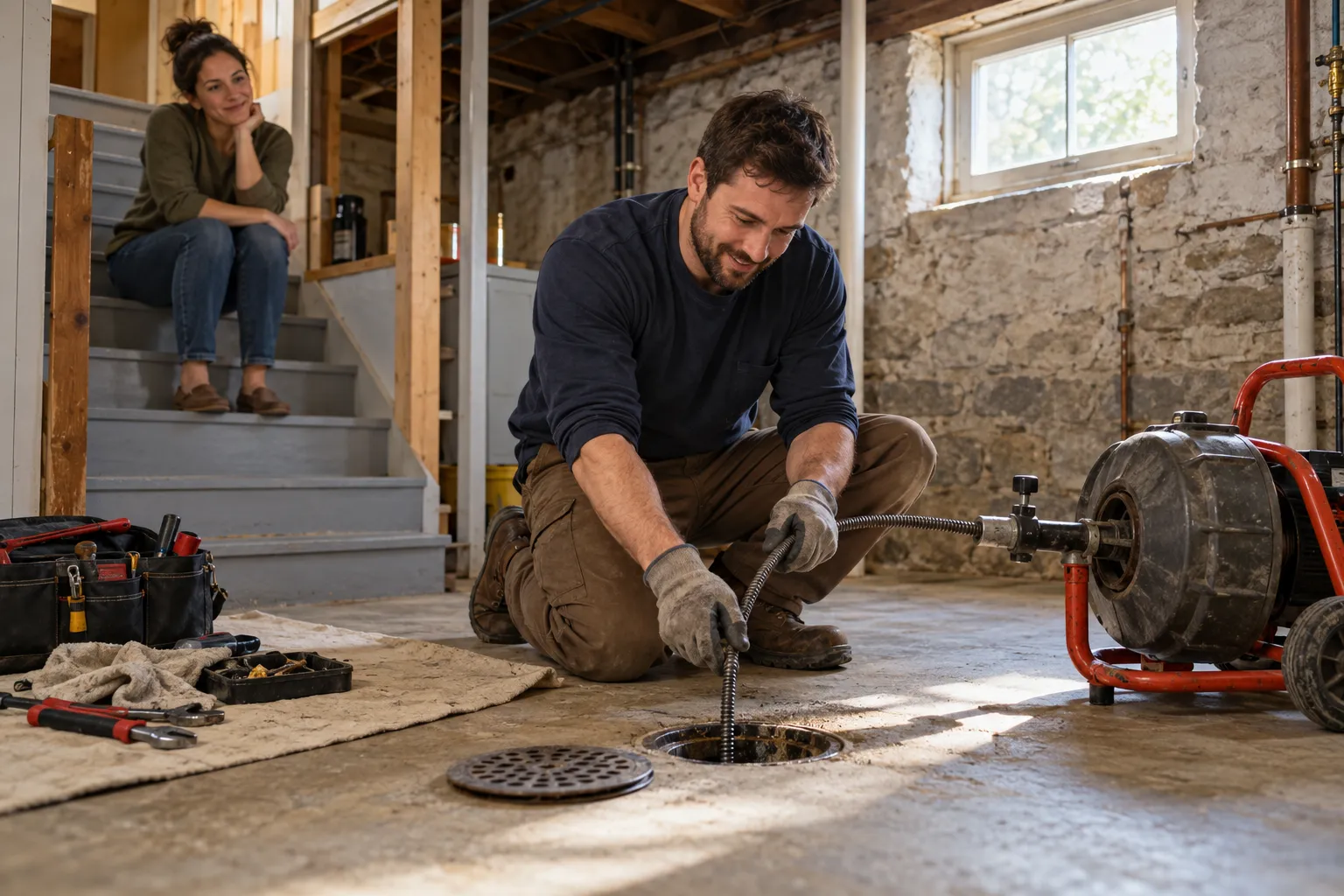
A drain rarely fails without warning. The sink drains a little slower each week, the tub gurgles, and a faint smell shows up near the basement floor drain. Then one evening the water stops moving. Peoplespecifically Plumbing is a referral service that connects homeowners in Detroit and the Detroit area with independent providers who clear drains.
This page walks through the problem in plain scenes. You will see how to tell a single clog from a bigger one, what providers do to clear a line, and what chemical cleaners can do to old pipes. You will also get the questions to ask before you book, what a solid answer sounds like, and the red flags worth walking away from.
Drain Backing Up? Start Here
Say you step into the shower and water pools around your ankles. A few minutes later, the kitchen sink gurgles. That is your cue to act.
Stop adding water. Skip the dishwasher, the washer and extra flushes. Move rugs and boxes away from the low spots. If the water smells like sewage, keep kids and pets out of the area.
Then ask a provider one plain question: "Do you handle emergency drain clearing, and what should I do before you get here?" A good answer is specific. A vague answer is a hint to keep looking.
One Drain or the Whole House?
Picture a bathroom sink that drains slowly while every other fixture works fine. That points to a clog in that one branch, often close to the drain.
Now picture the opposite. You flush a toilet and the tub burbles. Or the basement floor drain bubbles when the washer drains. That pattern means the shared line is blocked.
Tell the provider exactly what you saw. It helps them decide what tools to bring and whether they may need to look at the main line.
Common Causes of a Blocked Pipe
Most clogs build up slowly. These are the usual suspects:
- Hair and soap scum packed into bathroom lines
- Cooking grease that cooled and hardened inside the pipe
- Wipes sold as "flushable" that never break down
- Food scraps and coffee grounds in the kitchen line
- Tree roots that find a small gap in an older line
- Mineral scale inside aging pipes
In frame houses from many decades ago, older pipe can be rough inside. Rough walls catch debris more easily, so clogs return.
Seasons Change the Odds
In winter, deep frost can shift soil and stress buried lines. A line that was borderline in fall may stop in January.
In spring, heavy rain and flooding can push water into the ground around your pipes. If your basement has a sump pump, check that it runs, because a swamped basement can look like a drain problem.
Hot, humid summers and big thunderstorms bring their own trouble. Grease softens and slides down the line, then cools and sticks. Storm water and roots can strain the line outside.
Ask the provider whether the season changes how they would approach the job.
How Providers Clear a Drain
Imagine a kitchen sink that will not budge. A provider usually starts small and moves up only if needed.
- Hand tools: a plunger or small hand auger for clogs near the fixture
- Cable machine: a motorized cable that cuts through or pulls out the blockage in longer runs
- Camera inspection: a small camera that shows what is in the pipe and where
- Hydro jetting: high-pressure water that scrubs grease and buildup off the pipe walls
Ask which method they plan to use and why. A solid answer ties the tool to what you described, not to the biggest invoice.
Why You Should Skip Chemical Drain Cleaners
Say it is late and the sink is full. A bottle of drain cleaner under the cabinet looks like an easy fix.
The trouble is that the liquid can sit in standing water without reaching the clog. It can also be harsh on older pipes and joints. And it creates a hazard for the next person who works on the line, since splashes can burn skin and eyes.
If you already poured some in, tell the provider. They need to know before they open the drain.
Hire With Confidence: Ask Before You Book
Here are the questions worth asking, and what a good answer sounds like.
- "Can you give me a written quote before work starts?" A good answer explains what is included and when the price could change.
- "Are you licensed and insured in my state?" A good answer is a clear yes, with details you can check yourself.
- "What will you do if the first method does not work?" A good answer names the next step and says whether it changes the price.
- "Will you check the line with a camera?" A good answer explains when it is useful and when it is not.
Know the Red Flags
Imagine a caller who quotes a very low price, then adds charges once they are in your basement. Walk away from that.
Other warning signs:
- No written quote, or a refusal to put the price in writing
- Pressure to decide on the spot
- A big repair pitched before anyone looked at the drain
- No clear answer about licensing or insurance
- Cash-only demands with no paperwork
What Happens When the Provider Arrives
A calm visit has a pattern. The provider asks what you saw, looks at the affected fixtures, and explains the plan. Then they clear the line and test it by running water.
Before they leave, ask what caused the clog. If it was grease or wipes, you can fix the habit. If it was roots or a broken section, ask what the next step would be. Providers can often help document damage for a claim, and some policies may cover sudden damage, so check your policy.
Keeping Drains Clear Afterward
Small habits matter more than any product.
- Wipe greasy pans with a paper towel before washing
- Use hair catchers in the shower and tub
- Bin wipes, floss and paper towels instead of flushing them
- Run hot water for a moment after using the kitchen sink
- Test your sump pump before spring and before big storms
When It Is More Than a Drain
Sometimes a clearing helps for a week, then the problem comes back. Or several drains back up again and again. That can point to a damaged or root-filled main line. Ask the provider whether a camera look is worth doing.
What's Included
Emergency drain clearing for backed-up lines
Providers can clear sinks, tubs, toilets and floor drains that have stopped moving water.
Camera line inspection
A small camera shows what is blocking the pipe, so the fix matches the actual problem.
Hydro jetting
High-pressure water scrubs grease and buildup from pipe walls when a cable alone will not do.
Written estimates
Ask for the scope and price on paper before work starts, so there are fewer surprises.
Typical Drain Cleaning Costs
Prices depend on the drain, how deep the clog sits, and the tools needed. These are typical U.S. ranges only, so ask for a written quote before work begins.
| Service | Typical range | Notes |
|---|---|---|
| Sink or tub clog | $100 – $300 | Usually a hand tool or small cable |
| Toilet clog | $100 – $350 | Higher if the toilet must be removed |
| Basement floor drain | $150 – $400 | Often has debris or sediment |
| Main line cable clearing | $200 – $600 | Longer run, bigger machine |
| Hydro jetting | $350 – $800 | Used for heavy grease or buildup |
| Camera inspection | $100 – $400 | Often added when clogs keep returning |
How It Works
Stop the water
Hold off on sinks, showers, laundry and flushing so the backup does not spread further.
Note what happened
Write down which drains are slow or gurgling, and when it started.
Request an estimate
Use the form or Request a callback to check provider availability and ask for a written quote.
Confirm before work starts
Review the method, the price and what happens if the first approach does not clear the line.
Why Call Peoplespecifically Plumbing
Ask better questions first
Knowing what to ask helps you compare providers on clear answers, not just on price.
Spot red flags
Simple warning signs help you avoid pushy sales and quotes that change.
Independent local providers in our network
Peoplespecifically Plumbing connects you with independent providers serving the Detroit area, and the provider does the work, not Peoplespecifically Plumbing.
Plain information
Clear steps and typical ranges help you decide calmly, even when water is rising.
Other Services
Need drain cleaning help in Detroit?
Have a plumbing problem or a question about how referrals work? Send a message to contact@peoplespecifically.living or use the request form and we will point you toward a local provider.
No obligationDrain Cleaning Help FAQ
Why is my drain backing up?
The most common causes are grease, hair, wipes, food scraps and roots. If only one fixture is slow, the clog is probably nearby. If several back up together, the shared line may be blocked.
Is it safe to use chemical drain cleaner?
It can be harsh on older pipes and may not reach a clog beneath standing water. It can also splash on whoever works on the drain next. If you used some, tell the provider before they start.
How much does drain cleaning cost?
A simple sink or tub clog often runs about $100 to $300 in the U.S. Main line clearing and jetting cost more. Prices vary by job, so ask for a written quote before work starts.
Request a callback
Have a plumbing problem or a question about how referrals work? Send a message to contact@peoplespecifically.living or use the request form and we will point you toward a local provider.
No obligation