Sewer Line Repair Services for Homeowners
A failing sewer line rarely stays quiet. It shows up as a gurgling toilet, a basement drain that backs up, or a soggy patch in the yard. Sewer line repair services deal with the pipe that carries waste from your house out to the main, and the work can range from a short spot repair to a brand new line.
Peoplespecifically Plumbing is a referral service, and the work itself is done by independent providers. We connect homeowners across the Detroit area with local providers who handle camera inspections, blocked pipe services and sewer line repair. This page walks through the warning signs, the repair choices, the seasonal timing and the questions to ask before you hire anyone.
Sewage Backing Up? Start Here
Say you come home and the basement floor drain is bubbling with dirty water. Upstairs, the toilet gurgles whenever the washer drains. That pattern points to the main sewer line, not a single clogged sink.
Safety First
Sewage carries germs, so keep the household out of the wet area.
- Stop using water. No flushing, showers, dishes or laundry.
- Keep kids and pets away from the spill.
- Leave the electrical panel alone if you would have to stand in water to reach it.
- Open a window if the smell is strong.
- Skip chemical cleaners. They can burn skin and will not fix a cracked pipe.
Once the water is off, Request a callback to check provider availability in your area.
Signs Your Sewer Line Is Failing
Not every failure floods a basement. Many start quietly. Watch for these clues:
- Several drains slow down at once, especially the ones nearest the floor
- Gurgling from toilets or tubs
- A sewer smell near the floor drain or in the yard
- A sunken or unusually green patch of lawn
- A clog that returns a few weeks after it was cleared
- Damp spots along the foundation wall
Picture a ranch house where the tub backs up every few months. Each time someone clears it, and it works for a while. By the third time, the useful question is not whether the clog can be cleared. It is why it keeps coming back. Ask for a camera look.
What Damages Sewer Lines
Roots Looking for Water
Hot, humid summers push tree roots toward moisture. A hairline crack at a joint is enough for them to get in. Over time they thicken into a plug.
Age and Pipe Material
Frame houses from many decades ago often have clay, cast iron or fiber pipe. Clay joints separate. Cast iron rusts from the inside. Old fiber pipe can flatten out.
Frost, Floods and Storms
Deep winter frost can shift soil and bend a pipe. Spring flooding and severe thunderstorms can overload the system, and saturated ground can push water into cracked lines. Grease and wipes add to the trouble, since grease cools into a plug and wipes rarely break down. If your basement has a sump pump, ask a provider where it drains, because tying it into the sewer is a common cause of overload.
How Sewer Problems Are Diagnosed
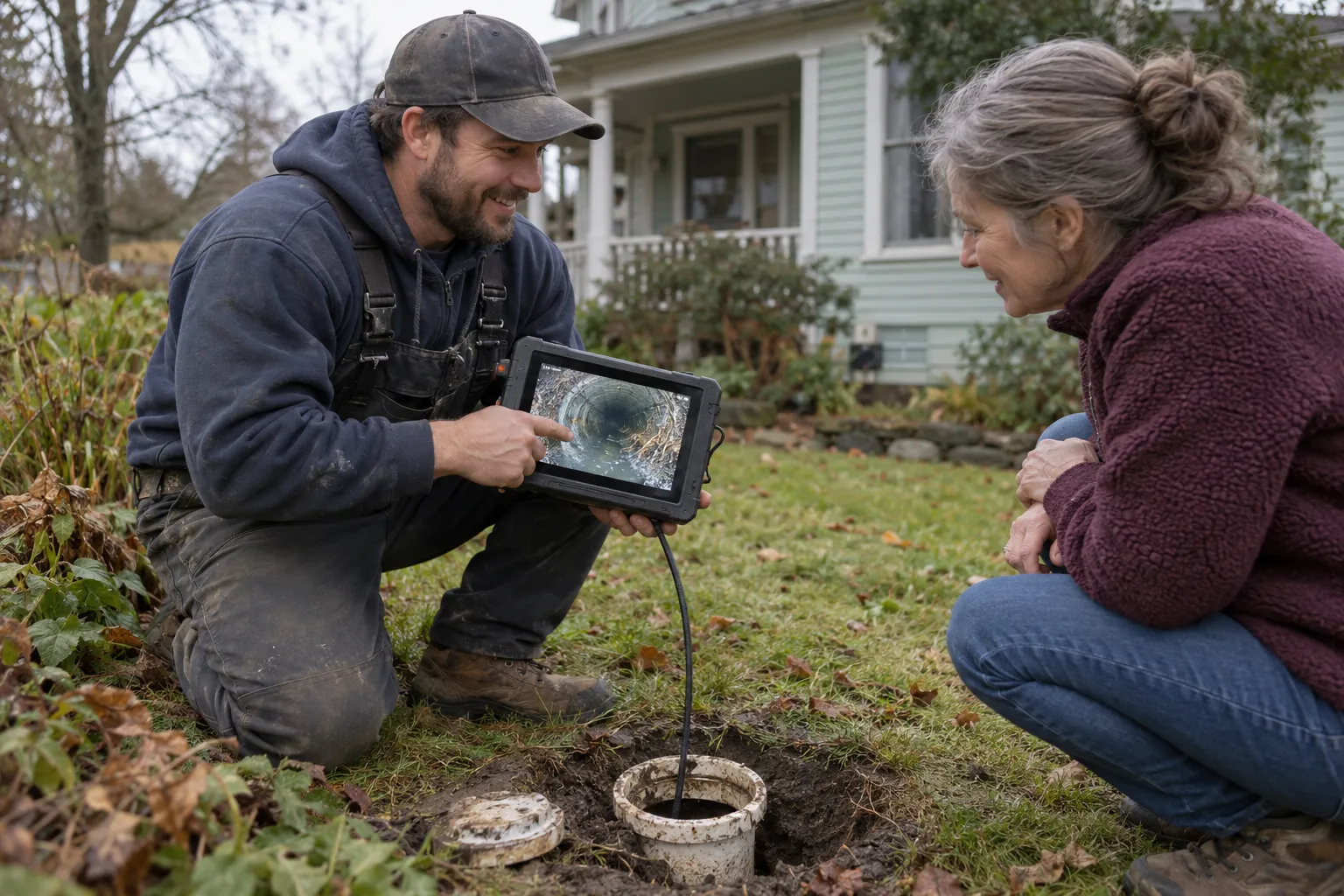
A good provider does not guess. A small camera on a flexible cable shows the pipe from the inside. It can reveal roots, breaks, and a belly, which is a sag that holds water. Many providers also use a locator to mark the depth and path of the pipe on the surface.
What a Solid Answer Sounds Like
Imagine the provider says, Here is the crack on the video, here is how far it is from the cleanout, and here is what I would do about it. That is a solid answer. Vague talk with no images is a red flag.
Sewer Line Repair Options
Say someone tells you the whole yard must be dug up. Sometimes that is true. Often there is another way, so ask which methods fit your pipe.
- Cleaning first: Cutting roots and jetting the line can buy time, but roots usually return.
- Spot repair: Dig down and replace one short bad section.
- Trenchless lining: A resin-coated liner is pulled in and hardened inside the old pipe. Less digging.
- Pipe bursting: A new pipe is pulled through while the old one is broken apart.
- Full replacement: An open trench, used when the pipe is collapsed or badly sagging.
Ask why they picked that method and what would change their mind.
Timing and the Seasons
Winter: Frozen ground slows digging and can raise the price. Ask how the cold affects the plan, and whether a method with less digging suits your pipe.
Spring: Wet soil and flooding can fill a trench. Ask how the provider will manage water on the site.
Summer and fall: Roots are most active in summer, and fall is a sensible time to book planned work before the ground freezes.
Permits and Property Lines
Your sewer has two parts. The private line runs from the house to the edge of your property. The main sits under the street. Homeowners are often responsible for the private part, and sometimes a bit more, but rules differ by area.
Digging in a yard or street may need a permit, plus utility marking before any work starts. Ask who pulls the permit and whether an inspection is required. If someone says no permit is needed without checking, treat that as a warning.
Questions to Ask the Plumber
Ask before you book. Keep this list handy:
- Can I see the camera video or photos?
- Will the written quote list the method, the scope and what could add cost?
- Who handles permits and utility marking?
- How will the yard be put back, and is that in the quote?
- What warranty comes with the work, and what does it cover?
- Are you licensed and insured in this state?
Know the Red Flags
- Pressure to sign on the spot
- A large cash deposit up front
- A diagnosis with no camera
- A price sent by text with no details
- Refusal to put anything in writing
Insurance and Paperwork
Some policies may cover sudden damage, while slow wear and root damage are often treated differently. Check your policy. Providers can often help document damage for a claim with photos, video and a written report.
When you are ready to compare options, request an estimate and keep every quote in writing.
What's Included
Camera Inspection
A look inside the pipe to find roots, cracks or sags before anyone digs.
Root and Clog Clearing
Cutting or jetting out roots and buildup to get waste flowing again.
Spot or Full Repair
Replacing a short bad section or a longer run of pipe, based on camera findings.
Trenchless Options
Lining or pipe bursting methods that can mean less digging in your yard.
Typical Sewer Repair Costs
Prices vary widely with pipe depth, length, material, soil and local rules. These are typical U.S. ranges only. Always get a written quote that names the method, scope and anything that could change the price.
| Item | Typical range | Notes |
|---|---|---|
| Sewer camera inspection | $100 – $500 | Ask for video or photos |
| Root cutting or jetting | $150 – $650 | Roots may return in time |
| Cleanout installation | $500 – $2,500 | Depth and access matter |
| Spot repair | $1,500 – $5,000 | Short section, open dig |
| Trenchless lining | $80 – $250 per foot | Needs a pipe that is not collapsed |
| Full line replacement | $3,000 – $15,000+ | Length, depth and restoration |
How It Works
Stop Water Use
Stop flushing, showering and running laundry or dishes, and keep people and pets away from any sewage.
Reach a Local Provider
Request a callback or send the request form to check which providers are available.
Get a Camera Diagnosis
Ask to see video of the pipe and a written quote for the work.
Choose and Approve Repair
Confirm the method, permits and yard restoration in writing before work begins.
Why Call Peoplespecifically Plumbing
Local Providers, Local Rules
Providers in our network work in your area and know how local permits and utility marking work.
Plain Answers
Our guides show you what to ask and what a solid answer sounds like before you hire.
Red Flags Explained
Learn the warning signs, such as pressure to sign fast, big deposits and diagnoses with no camera.
No Obligation
Request an estimate and compare. You decide whether to hire any provider.
Other Services
Need sewer line repair services in Detroit?
Have a plumbing problem or a question about how referrals work? Send a message to contact@peoplespecifically.living or use the request form and we will point you toward a local provider.
No obligationSewer Line Repair Services FAQ
How do I know if my main sewer line is clogged or broken?
If several drains slow or back up together, or a basement floor drain bubbles, the main line is likely involved. A camera inspection can show whether it is a clog, roots or a broken pipe.
Can a sewer line be repaired without digging up my yard?
Sometimes. Trenchless lining and pipe bursting need little digging, but they do not suit every pipe. A camera inspection shows whether yours qualifies, so ask the provider to explain why they chose their method.
Does homeowners insurance cover sewer line repair?
Some policies may cover sudden damage, but slow wear and root damage are often treated differently. Check your policy. Providers can often help document damage for a claim.
Request a callback
Have a plumbing problem or a question about how referrals work? Send a message to contact@peoplespecifically.living or use the request form and we will point you toward a local provider.
No obligation